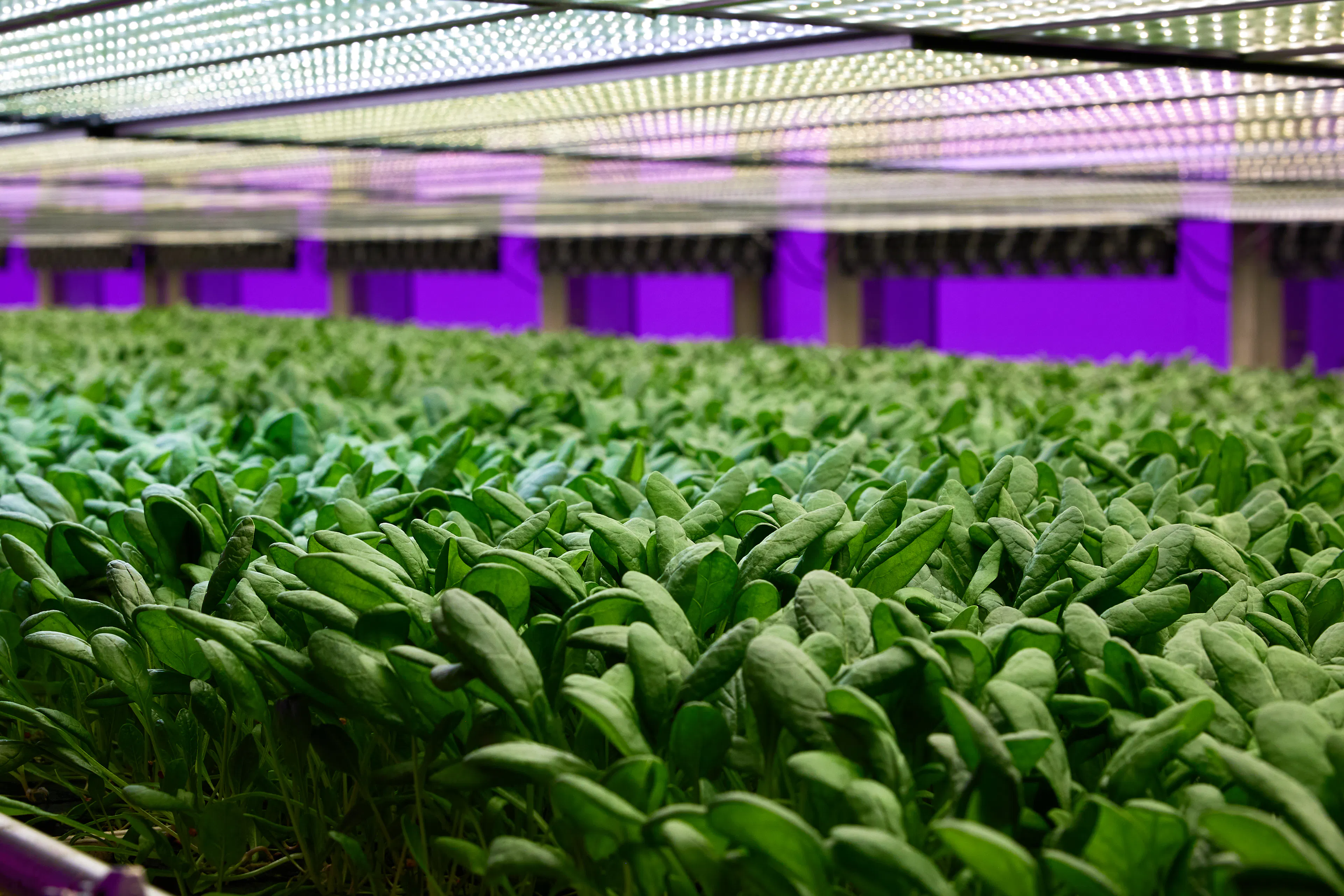
Growing the future of fresh food.
Grown indoors, all year round. Never sprayed. Ready to eat.
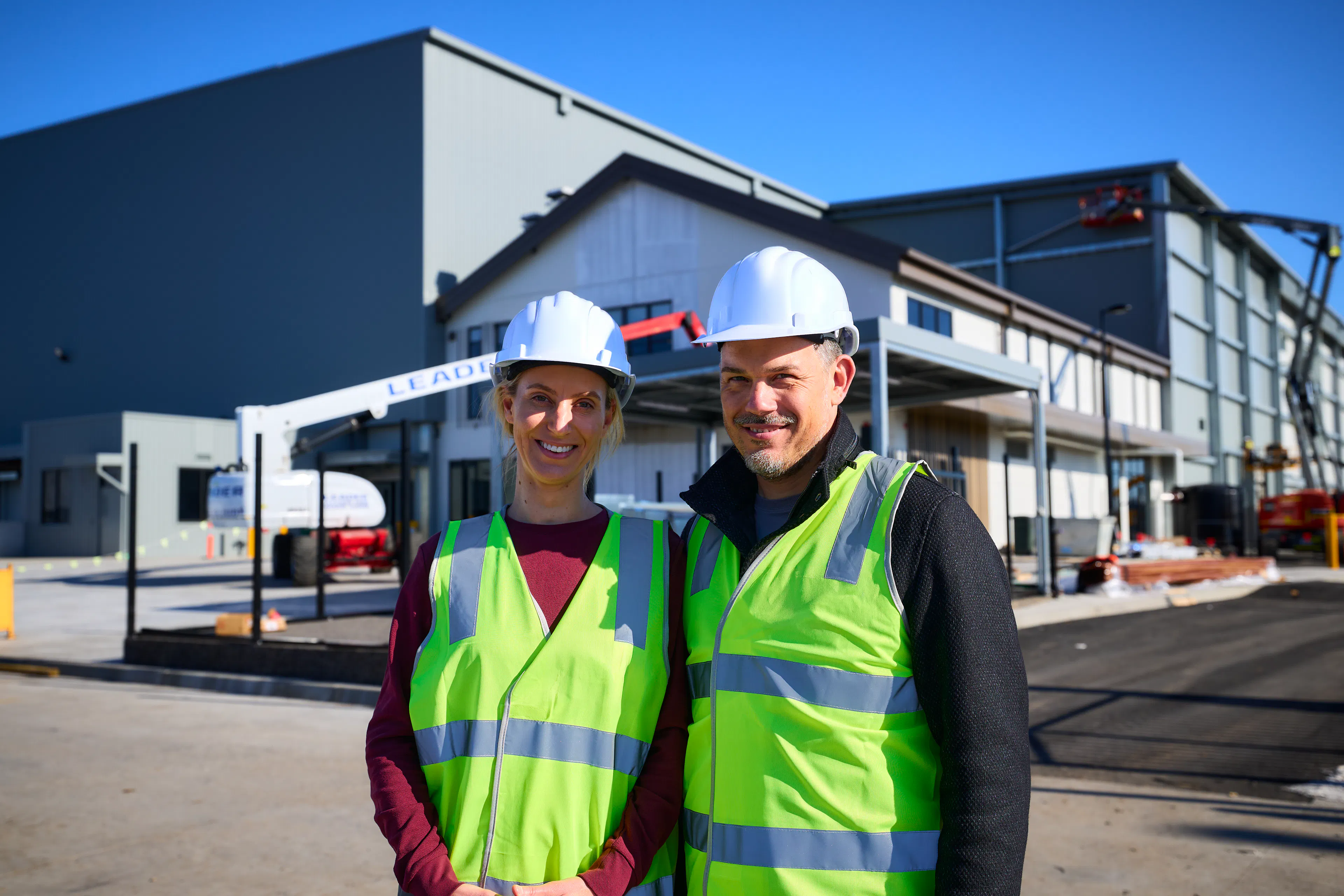
Liz and Daniel Tzvetkoff started Stacked Farm to fix something farming has never quite solved: produce is only ever as good as the season it grew in.
They set out to grow greens that are just as good in the middle of winter as in the middle of summer, and that are clean enough to eat straight from the bag.
Most American salad grows in two valleys, moves between them with the seasons, and travels for days to reach everyone else. That works until drought, heat or a recall says otherwise. Growing indoors takes the weather out of it, so what we harvest in January is the same as what we harvest in July.
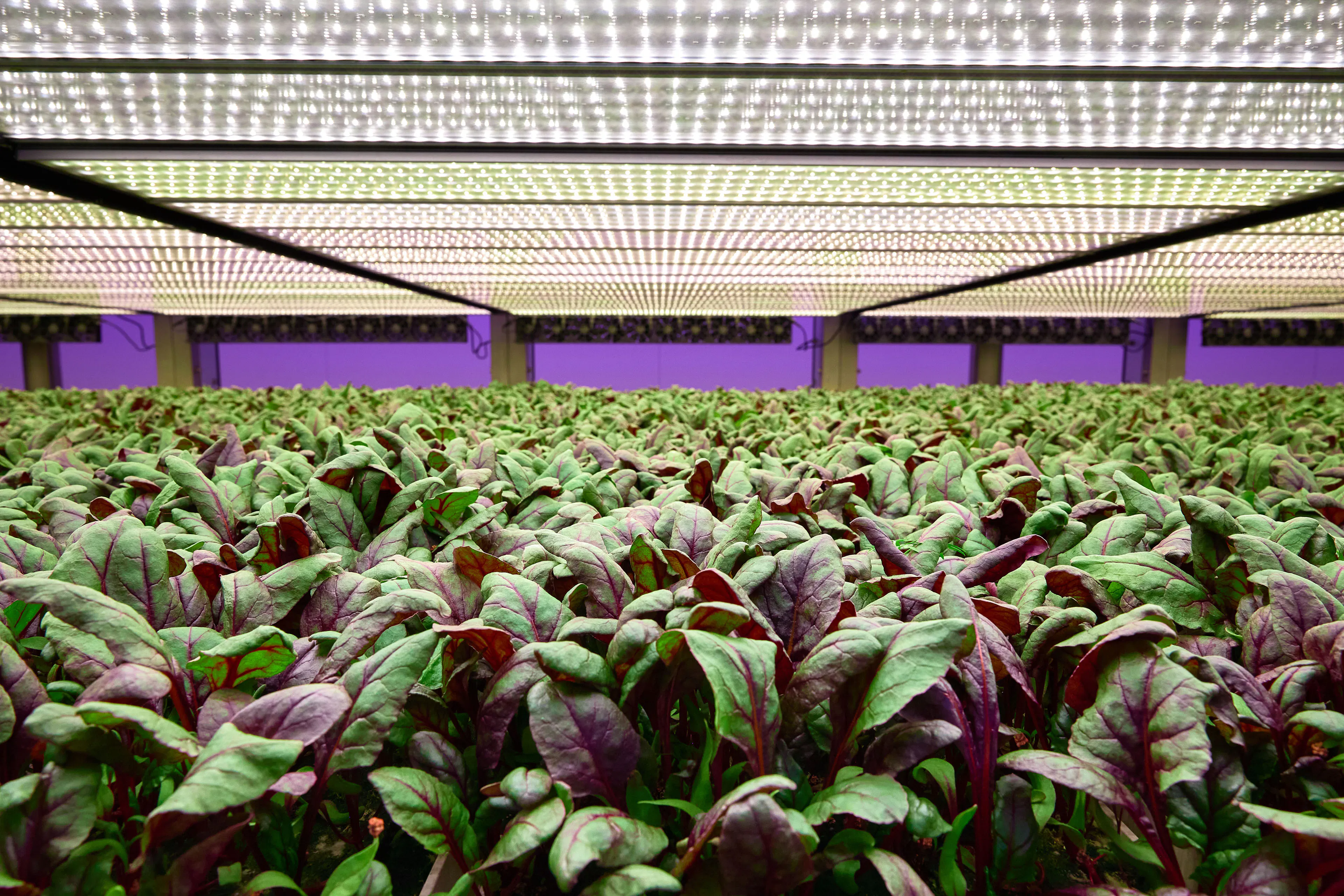
Grown under lights and picked at its best.
Most of how a leaf tastes comes down to two things: how evenly it grew, and what happens after it's picked. We control both.
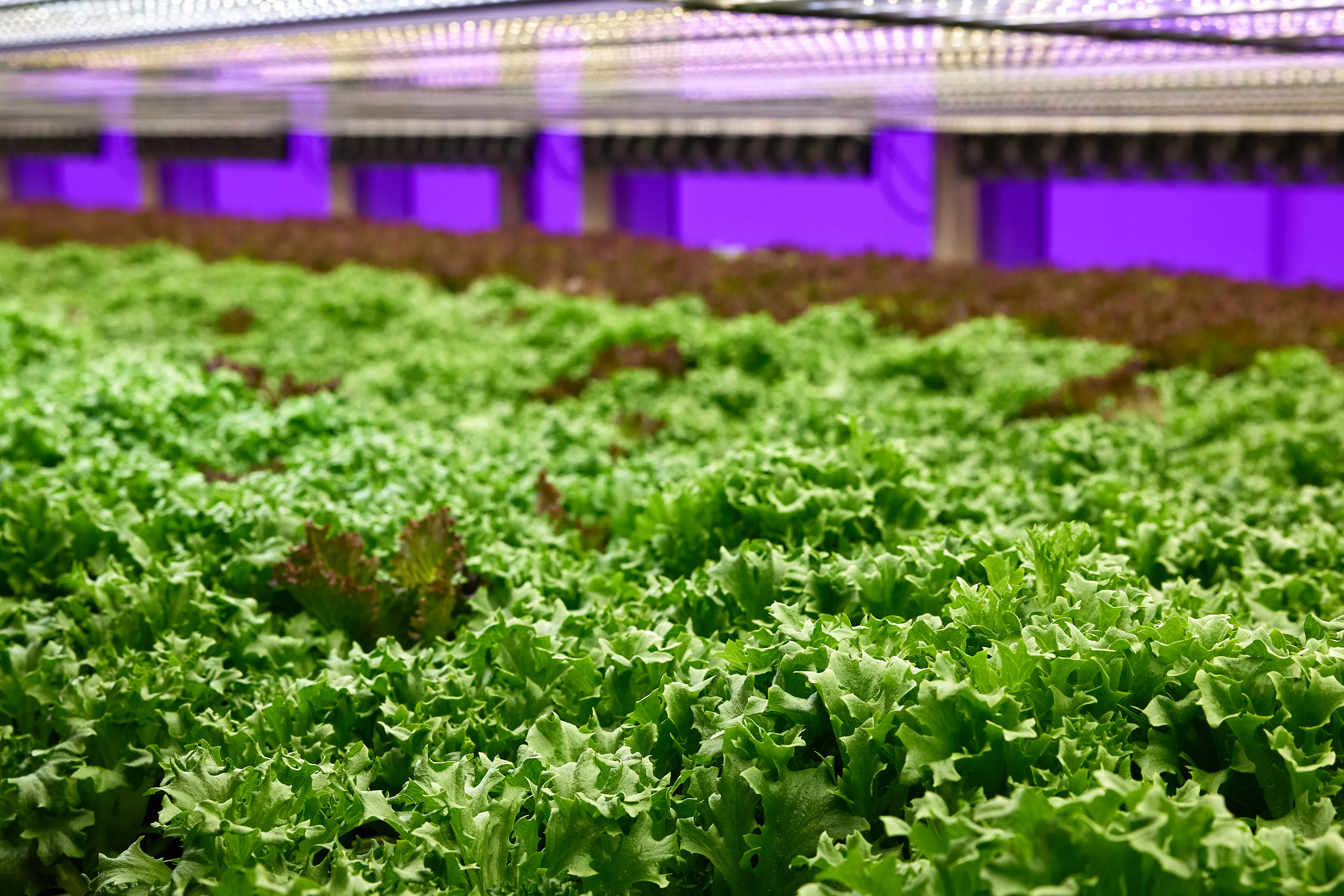
Plants only use a fraction of the light the sun throws at them, so we give them the part they use, at the same strength, every day. No cloudy weeks, no heatwaves, nothing for the plant to fight against. A leaf that grows evenly is sweeter and crisper than one that has been stressed, which is why lettuce that has been through a hot spell tastes bitter.
The second part is the bit between the farm and your fridge. Ours is picked, packed and chilled in the same building, and it never gets washed, so it goes into the pack clean and dry rather than bruised and waterlogged. A lot of salad spends its best days in a truck.
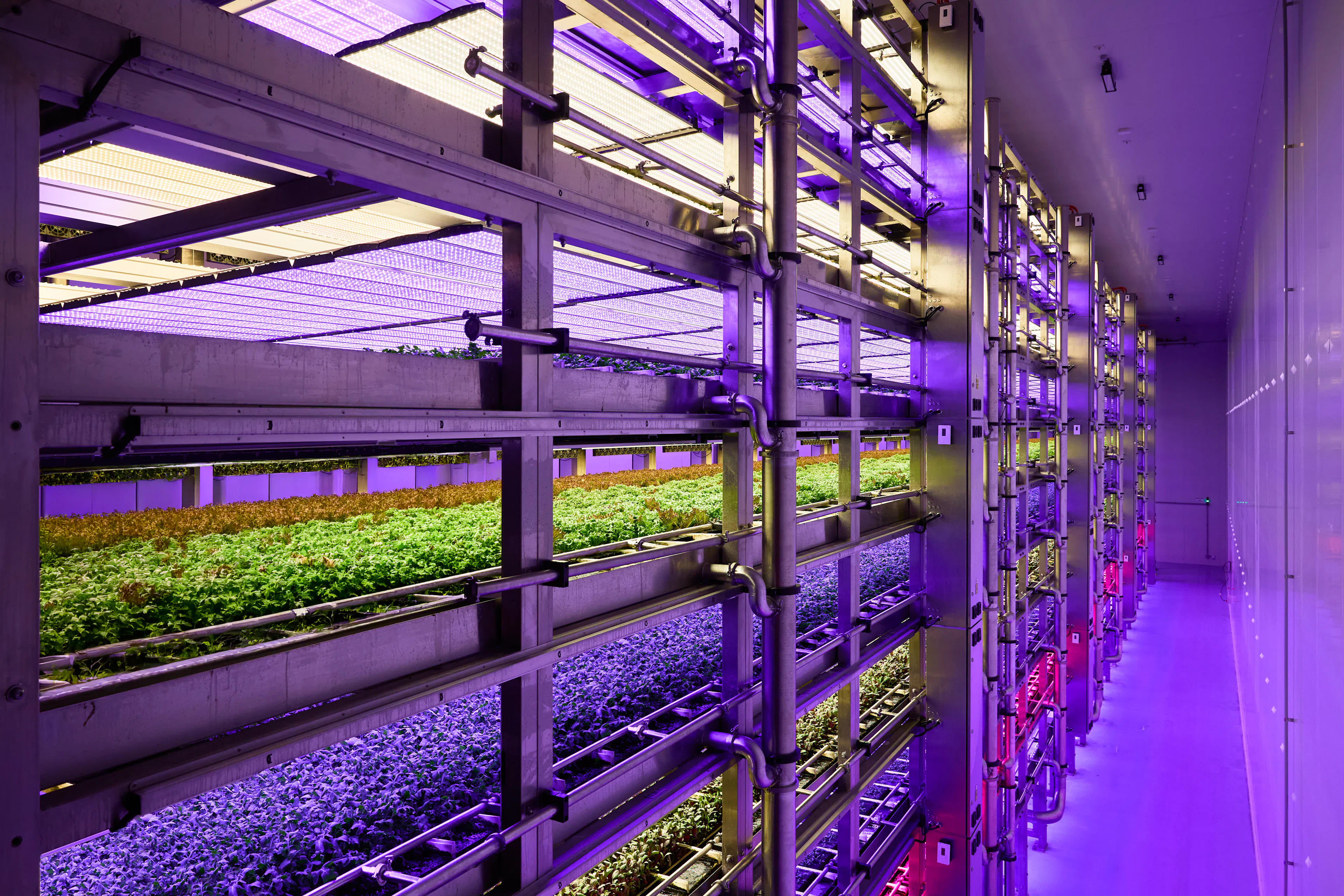
Stacked layers. No seasons.
Vertical farming is growing crops indoors in stacked layers, inside a controlled environment where light, water, temperature and nutrients are managed rather than left to the weather.
It means a crop can be grown at any time of year, in any weather, without soil and without pesticides. No seasons, no droughts, no floods, and no waiting for conditions to come good.
Sealed rooms and the same conditions, every day.
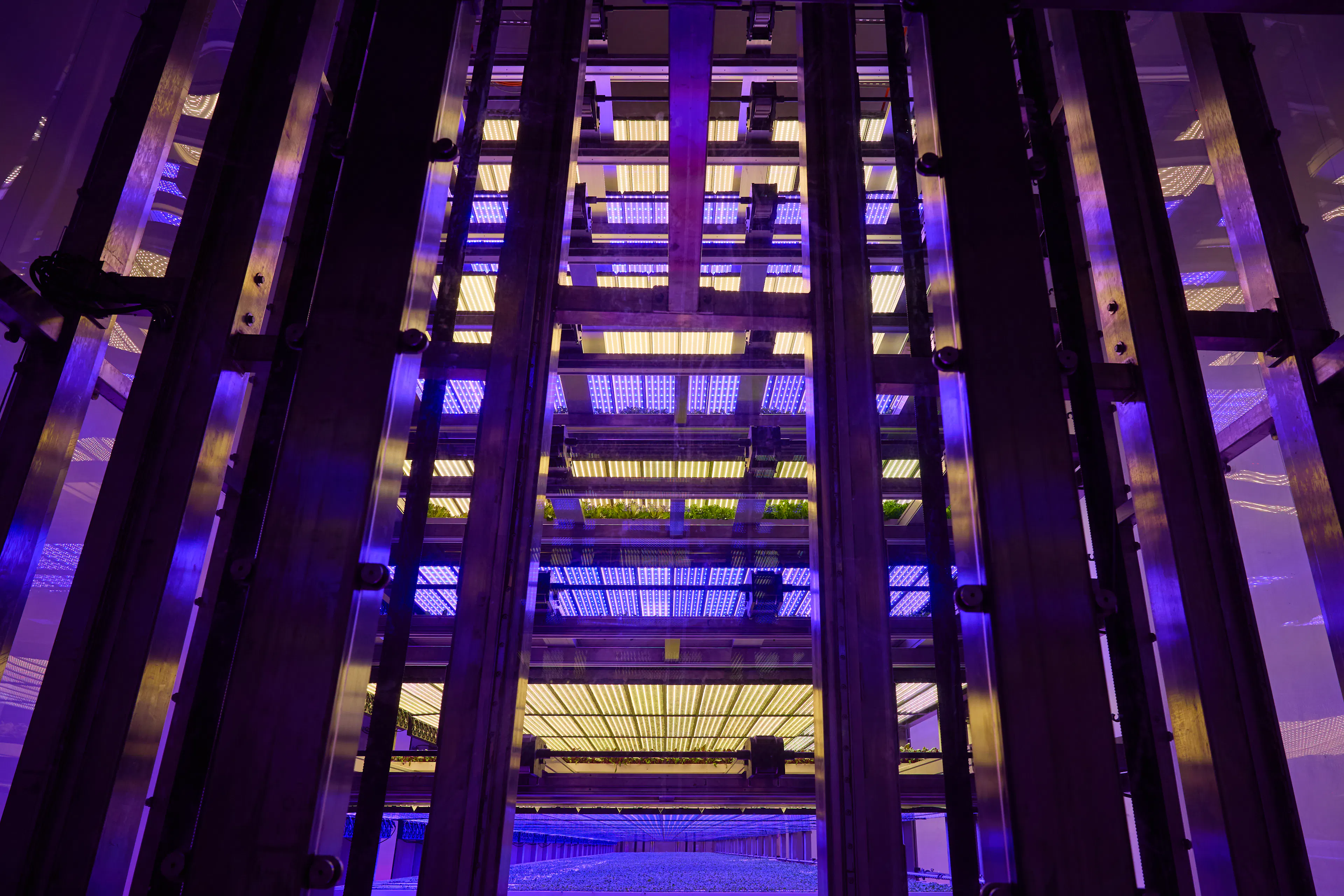
Our greens and herbs grow in sealed rooms stacked from floor to ceiling, kept at a steady 63 to 75°F all year. LED lighting replaces the sun, delivering the part of the spectrum plants actually use, at the same strength every day. Water carrying a measured blend of nutrients circulates past the roots and is recirculated rather than drained away.
Sensors track light, temperature, humidity and nutrient levels around the clock, and automated systems plant, tend and harvest the crop. Grown this way, our greens are ready in about half the time a field takes, then harvested, packed and chilled to 39°F on the same site.
No soil, only exactly what the plant needs.
Hydroponics is growing plants without soil. The roots sit in water carrying a measured blend of nutrients, so the plant gets what it needs, when it needs it. Soil is really just a delivery system, and not a very precise one.
We use a custom blend of macro and micro nutrients, tailored to each crop and adjusted through its growing cycle. Automated systems manage water quality, nutrient levels and growing conditions twenty four hours a day.
Why grow without soil?
Plants don't need soil. They need water, nutrients, light and oxygen, and soil is simply the usual way of delivering them. Take it out and a few things change.
No soil-borne pests or diseases, which is one of the reasons outdoor crops need spraying.
Water is recirculated rather than drained away. Across our farms we recycle around 90% of the water our plants grow in.
Every plant gets the same conditions, so one batch is like the last one.
Crops are ready in about half the time a field takes.
No seasons and no gaps, so supply doesn't wobble with the weather.
"Plants still determine success. Technology simply helps create ideal conditions."
Daniel Tzvetkoff, CEO & Founder
Nothing sprayed on.
Nothing to rinse off.
We grow in sealed, climate-controlled rooms, which means the pests, weeds and run-off that force outdoor farms to spray simply aren't there. So we don't spray. No pesticides, no herbicides, no fungicides, on anything we grow.
We had it tested rather than just stating it. An independent, ISO 17025 accredited lab screened our greens against 312 pesticides and residues. Nothing was detected, and we test again on an ongoing basis.
That's why there's nothing to rinse off. Nothing was ever sprayed on in the first place.
No detectable pesticide residues. Independently tested.
Built with technology.
Judged on taste.
Behind every harvest is a team of horticulturalists, plant biologists, engineers and a chef. The farm is almost entirely automated, but automation doesn't decide anything. Our horticulturalists read the crop and set the conditions, and the machines carry them out precisely, every day, without getting tired or distracted.
We design and build our own farms, which is what lets us keep changing them. Twelve of our grow rooms are set aside for research, where we test new varieties, new growing recipes, and crops most people assume can't be grown indoors at all. There is always a next version in progress, and there always will be.
For all of that, everyone here is working towards the same thing. Not the cleverest farm, or the most automated one, but produce that tastes good on a plate. A leaf can be perfectly grown, perfectly consistent and perfectly clean, and still be dull to eat.
Growing it well is the method. Making it worth eating is the point.
A farm with the roof on.
It doesn't look like a farm and it isn't meant to.
We're about to break ground on our first US farm in Menifee, California, built to the same design, by the same team, as the two farms we already run in Australia.
The first has been growing on the Gold Coast since 2024. It's three things at once: a working farm, our head office and our research centre, with twelve grow rooms where we trial what to grow next. The largest is near Melbourne, six grow rooms stacked into a single site.
That's what's coming to California in 2027.
Let's talk before we open.
We've been growing, packing and supplying leafy greens commercially in Australia since 2024, and our first US farm is under construction in Menifee, California.
Growing indoors changes what a supplier can promise. No weather to work around, no season to wait for, and the crop that arrives in January is the same one that arrives in July.
Menifee is being built by a team of growers, scientists and engineers, and we're hiring ahead of opening. So whether you want our product on your shelves, want to understand how we build, or want to help us build it, now is the right time to talk.
More greens on the grid.
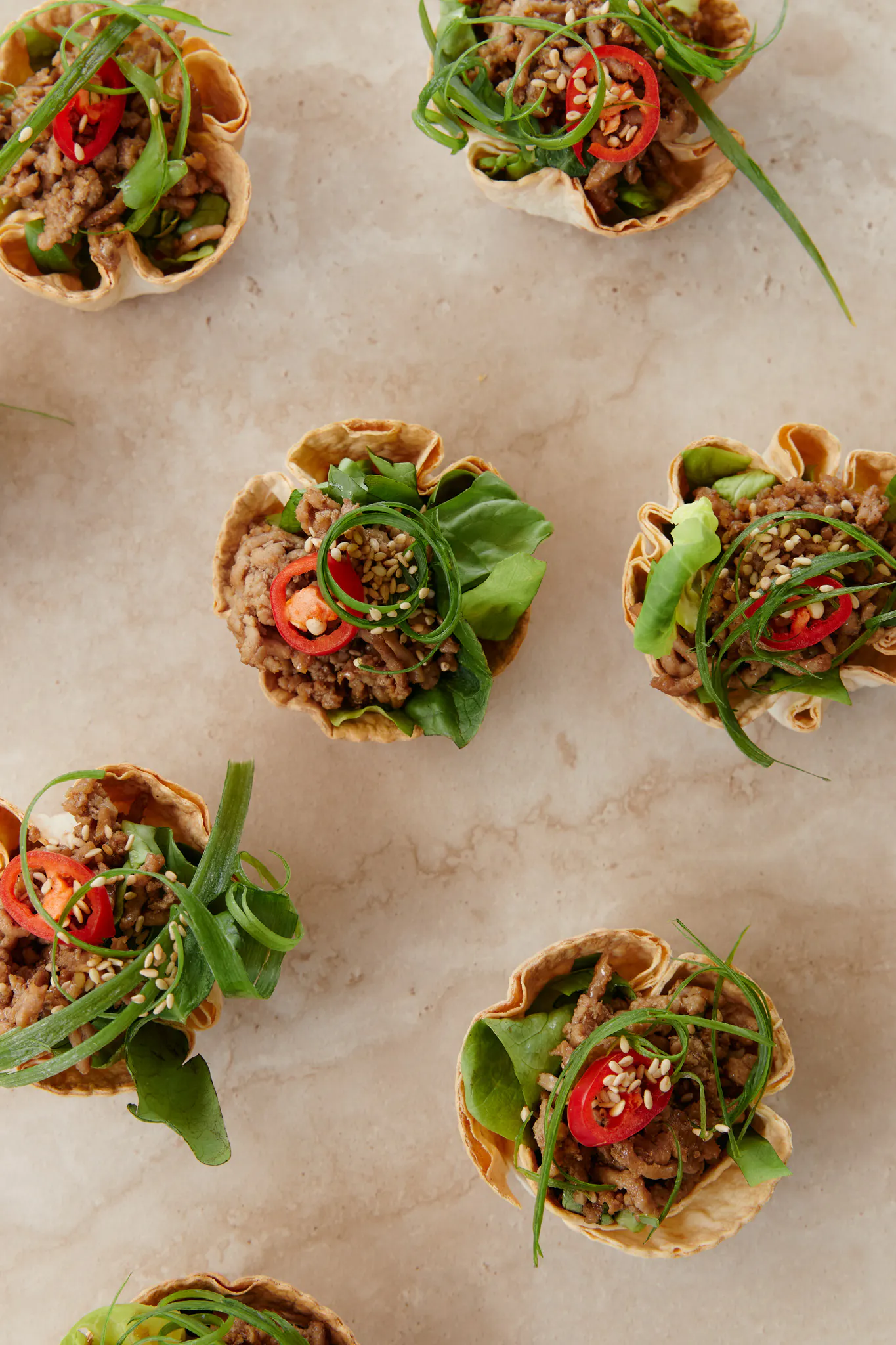
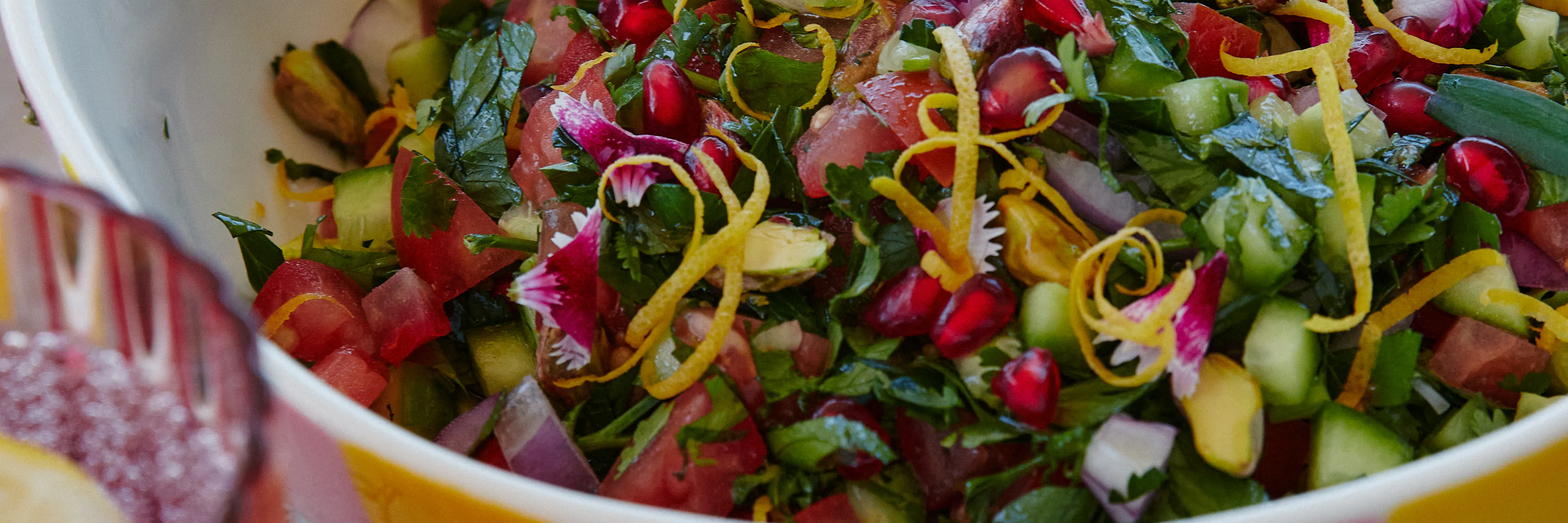
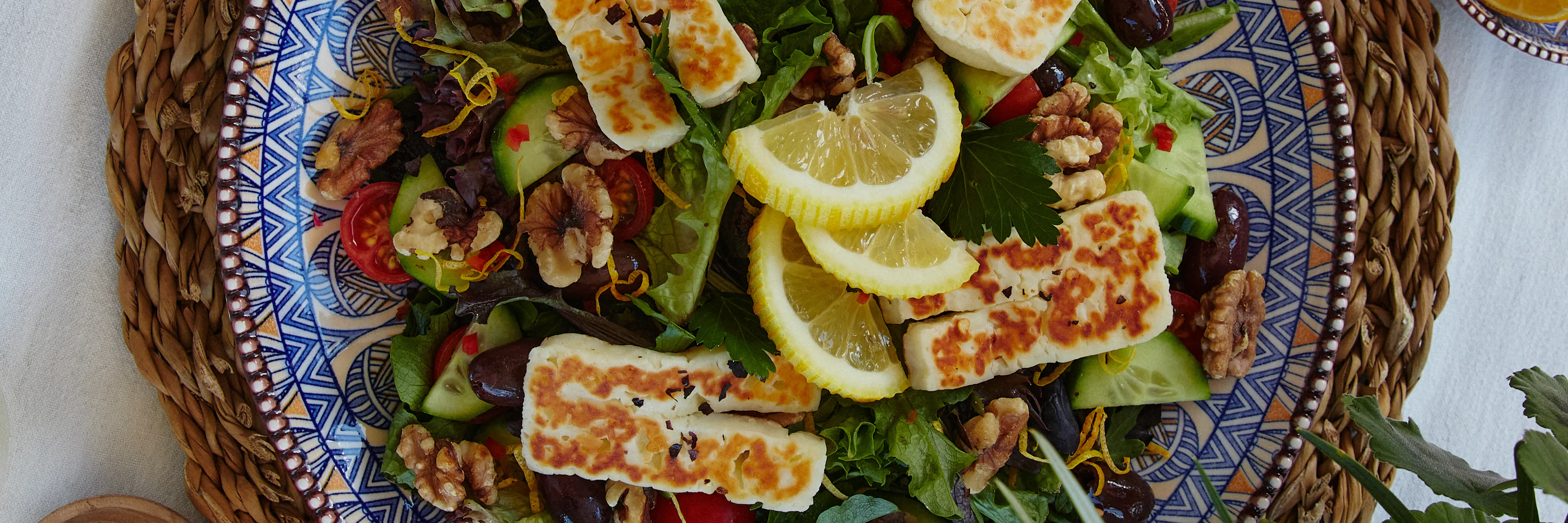
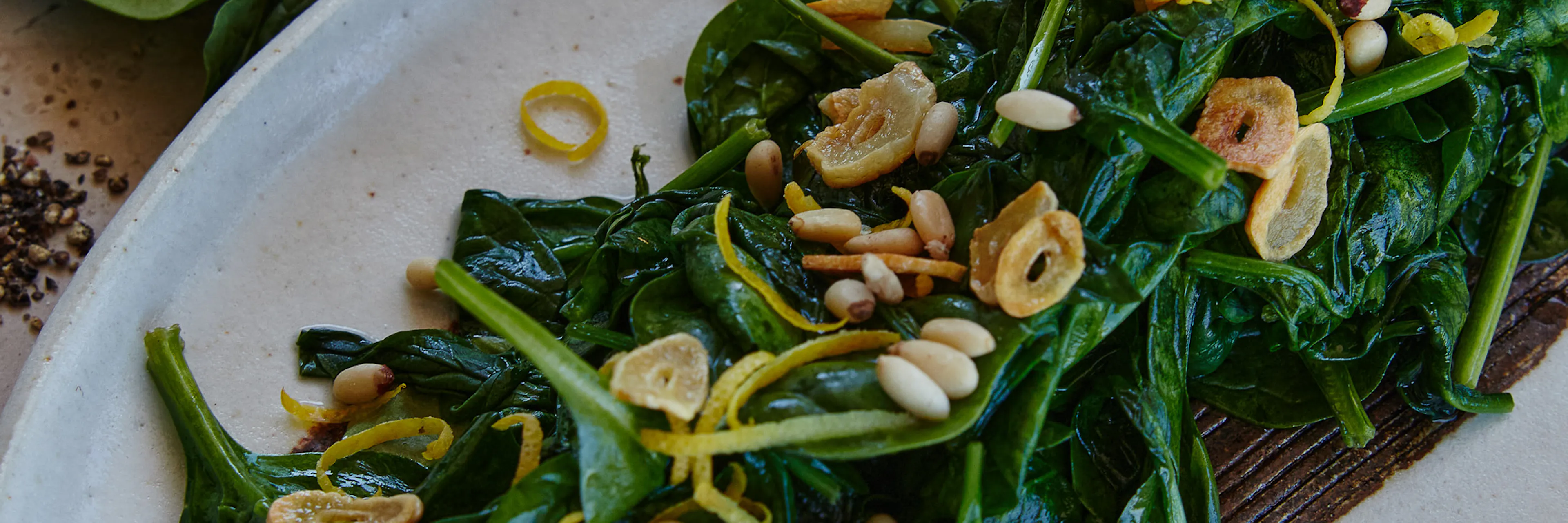
Follow for recipes, farm tours and a very close look at some lettuce.
FAQs
No, we're not certified organic, because in Australia hydroponic growing doesn't fall under the organic certification. It's worth knowing what that label does and doesn't cover, though. Certified organic growers can still use a long list of approved pesticides. We don't use any pesticide, herbicide or fungicide at all, on anything we grow, and we have that independently tested. Certification is something we may look at in future. Not spraying is a decision we've already made.
Really. There's nothing to rinse off, because nothing was ever sprayed on. Our greens grow in a sealed room, in water instead of soil, and they're never touched by hand, so they go into the pack clean and dry. Most bagged salad is washed because it's grown outdoors, where soil, run-off and wildlife are part of the field. Ours isn't. Washing it again would only add water and bruising, which is what makes salad go slimy in the first place.
We're building our first US farm in Menifee, California. Join the list and you'll be the first to know when our greens reach a store near you.
Plants don't take nutrients from soil itself, they take them from water passing through it. We deliver the same nutrients directly, in the right amounts, which is why our crops come out consistent every time.
It tastes like it was picked yesterday, because it nearly was. Steady growing conditions mean the plant is never stressed, and going from farm to fridge without a long trip or a wash means the flavor hasn't had time to fade.
Our greens go into the bag clean, dry and never washed, which is the main reason bagged salad turns. Keep them sealed in the fridge, between 34 and 41°F, and they'll hold.
Herbs are a bit different. Basil is the one to watch: it doesn't like the cold and will go dark and limp in the fridge. Keep basil on the counter, out of direct sun, and use it while it's bright.
No. Real seeds, real plants, real food. We use conventional seed and conventional plant nutrition. Nothing is modified. We just control the conditions the plants grow in.
Our farms are in Australia, on the Gold Coast and near Melbourne. Our first US farm is being built in Menifee, California, to the same design and by the same team.
Our seed comes from specialist seed growers in the Netherlands, the same seed houses that supply conventional farms around the world.
Every day of the year. Growing indoors means no seasons, no droughts, no floods and no gaps. Most US salad moves between growing regions with the seasons, which is why quality wobbles through the year. Ours doesn't move anywhere.
Yes. Our farms are SQF certified and we grow and pack to HACCP food safety standards.
Be first to know
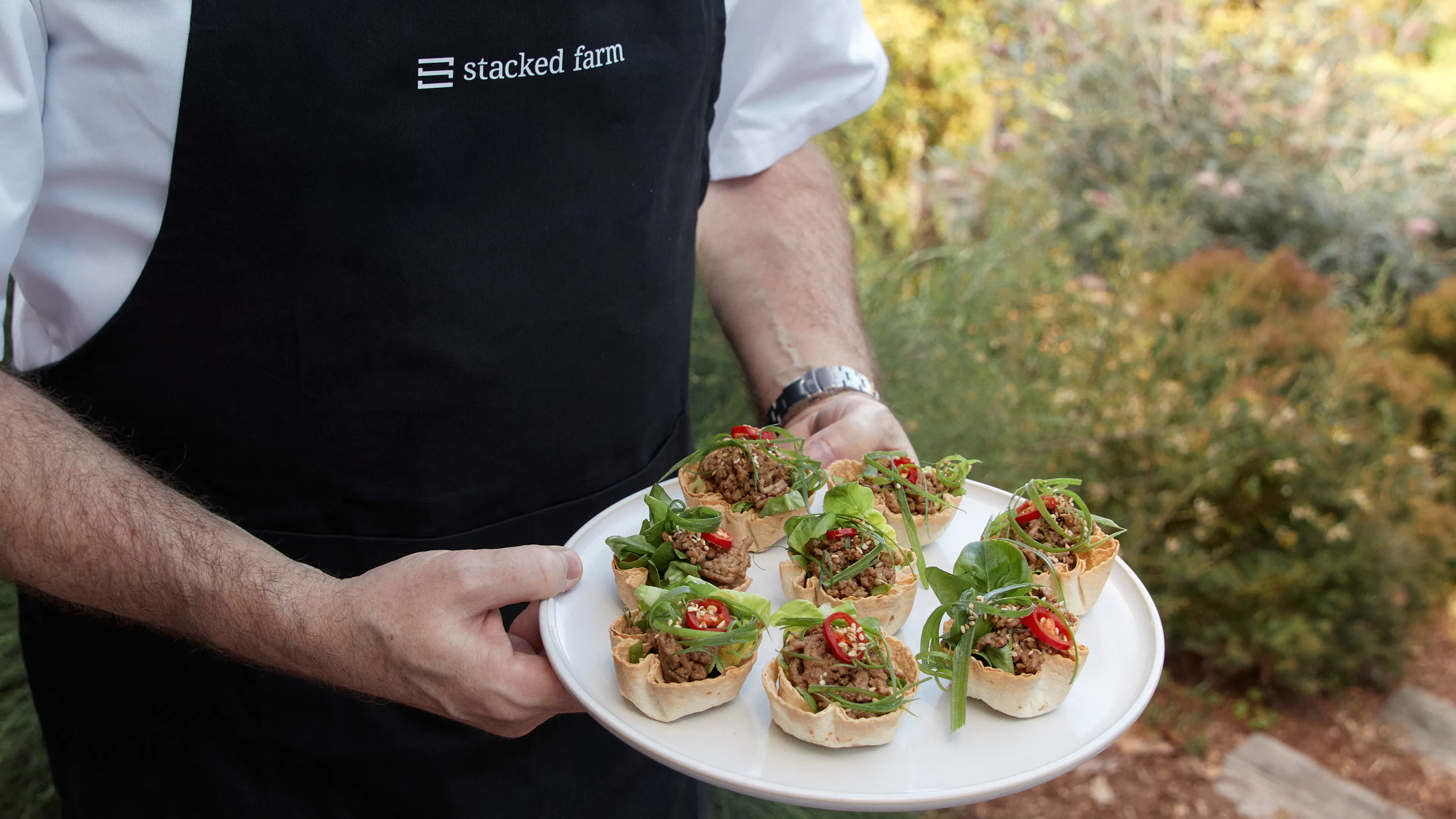
We're building our first US farm in California. Leave us your email and you'll know the moment our greens reach a store near you, plus recipes from Dave, our chef, and the odd offer worth having.
No spam, just greens. Unsubscribe any time. See our Privacy Policy.