12 August 2026
The Leaf That Does Both: Raw or Cooked, Spinach Delivers
Dave Moorkens— Stacked Farm Chef
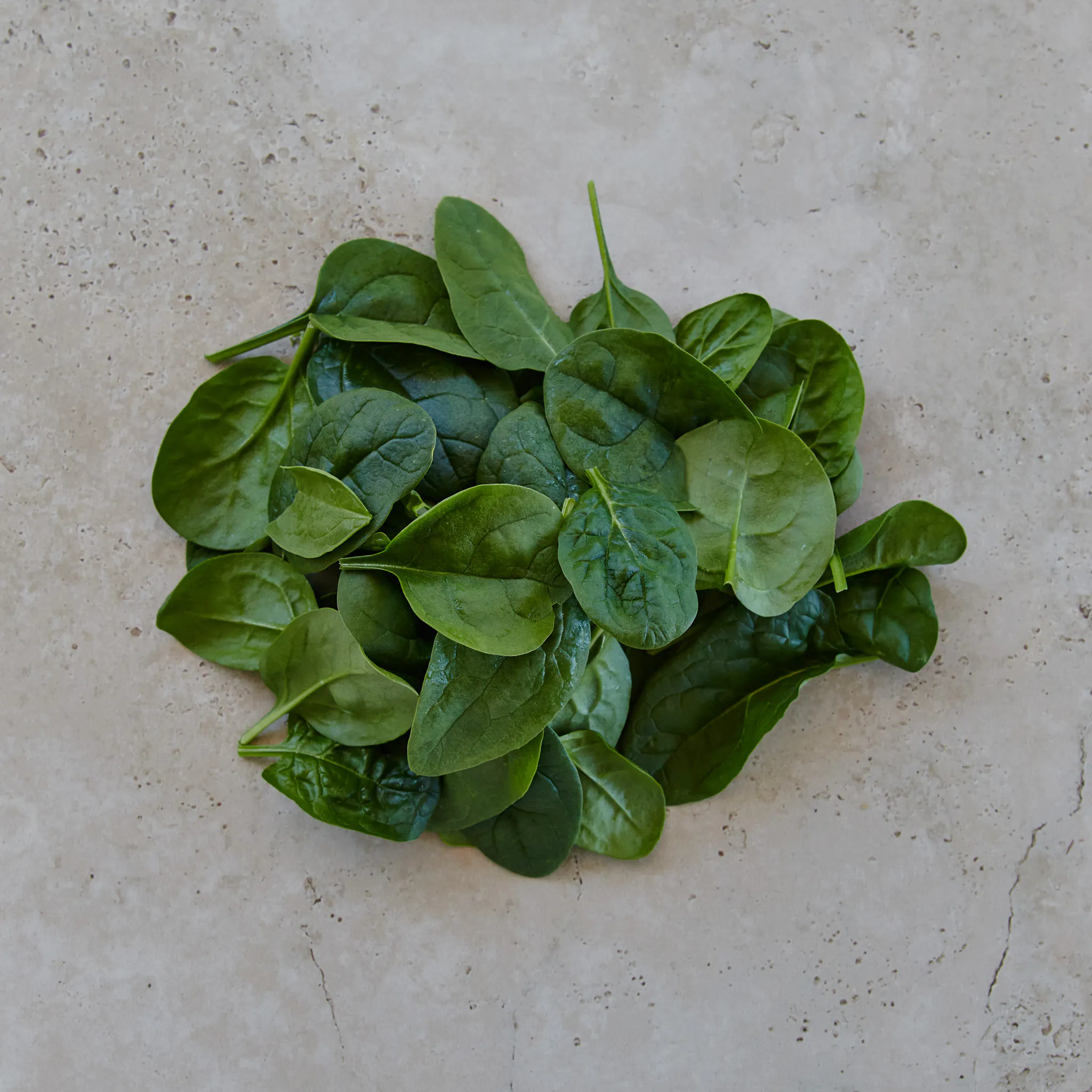
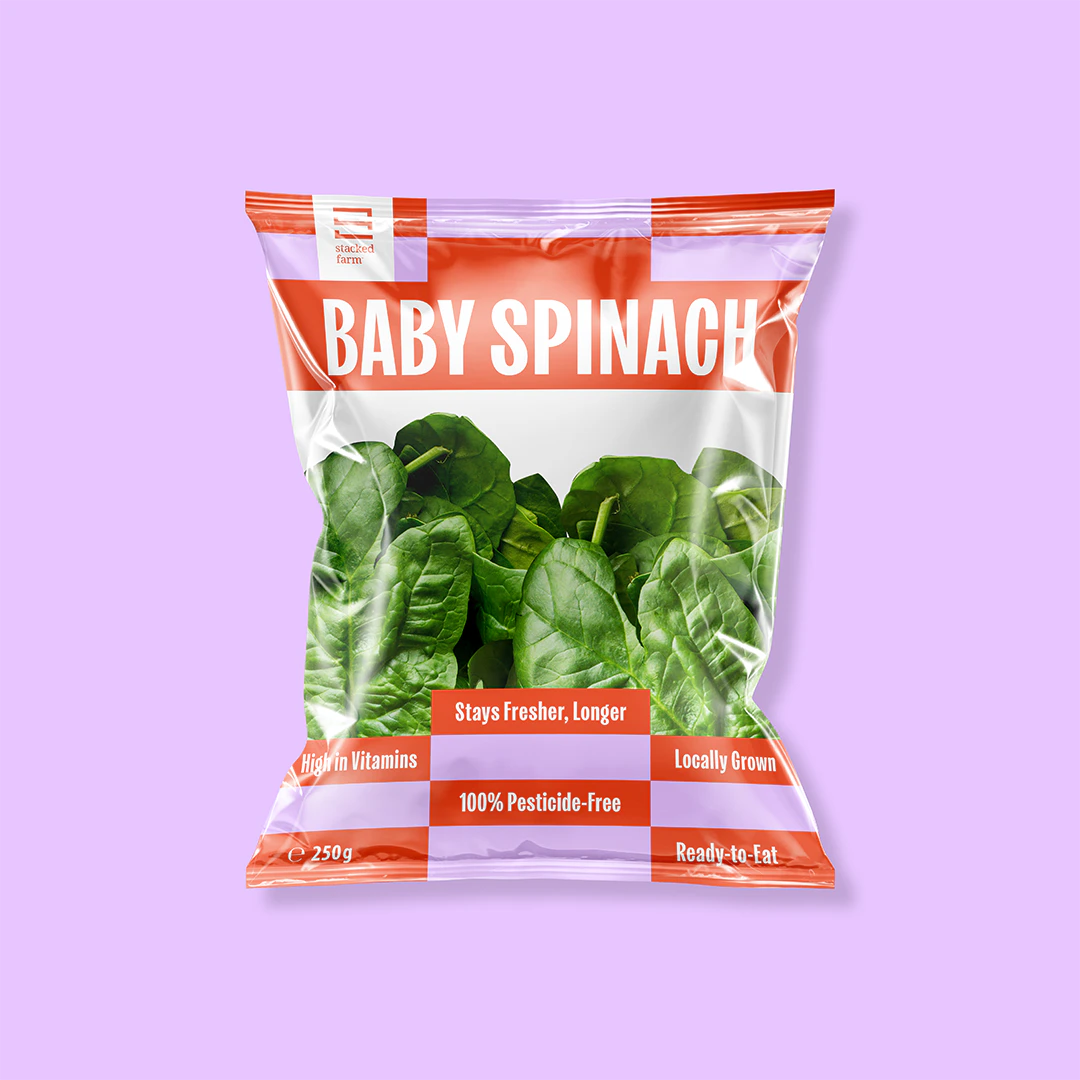
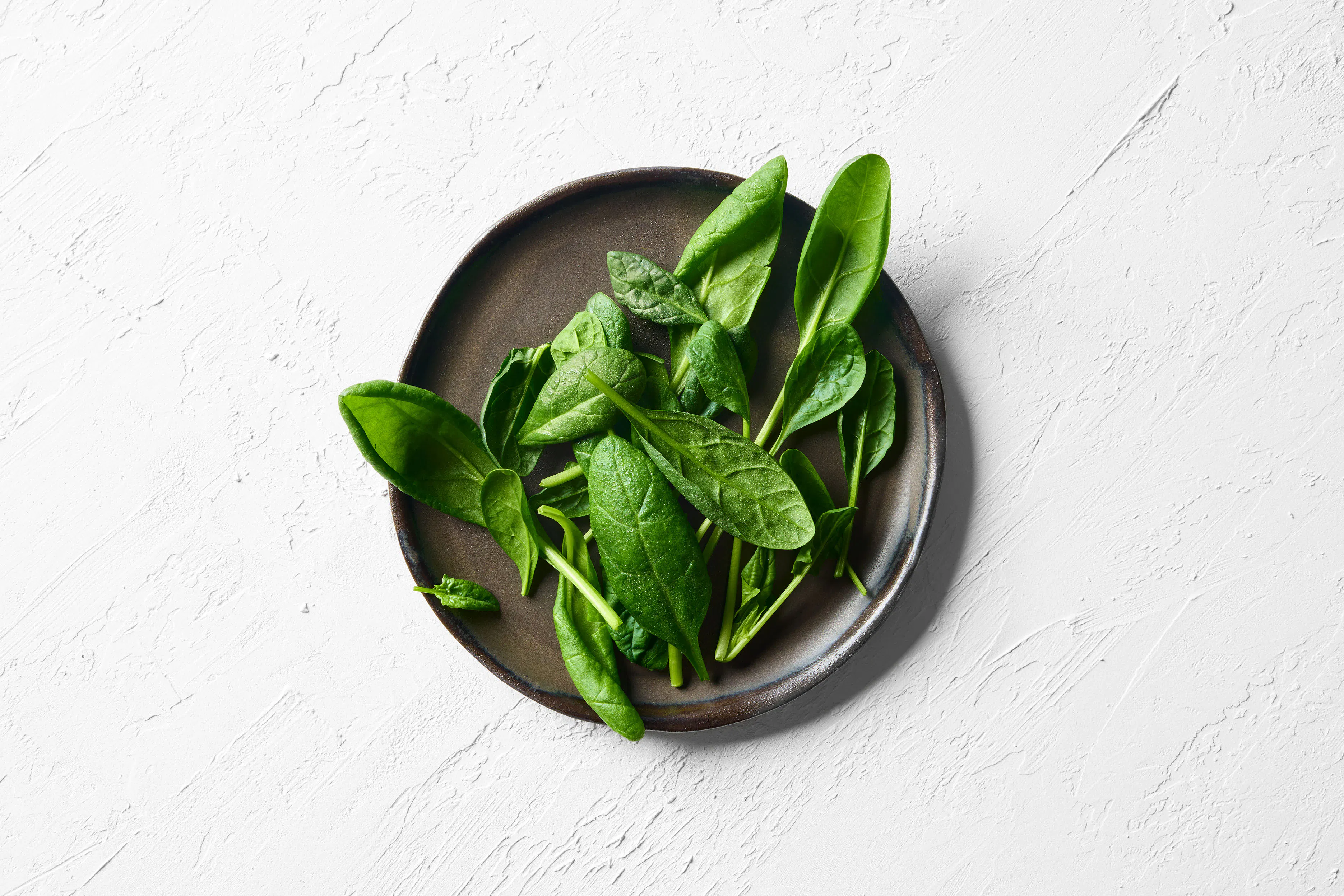
There are three main types. Baby spinach has small, tender leaves and a mild flavour, good raw or cooked, and the one you'll find on most shelves in Australia. English (or mature) spinach has larger, tougher leaves and is usually cooked. Savoy has crinkly, dark green leaves, also typically cooked.
English spinach is the fully grown plant with bigger, tougher leaves, best cooked down in a dish. Baby spinach is harvested young, while the leaves are still small and tender, which is what makes it good eaten raw.
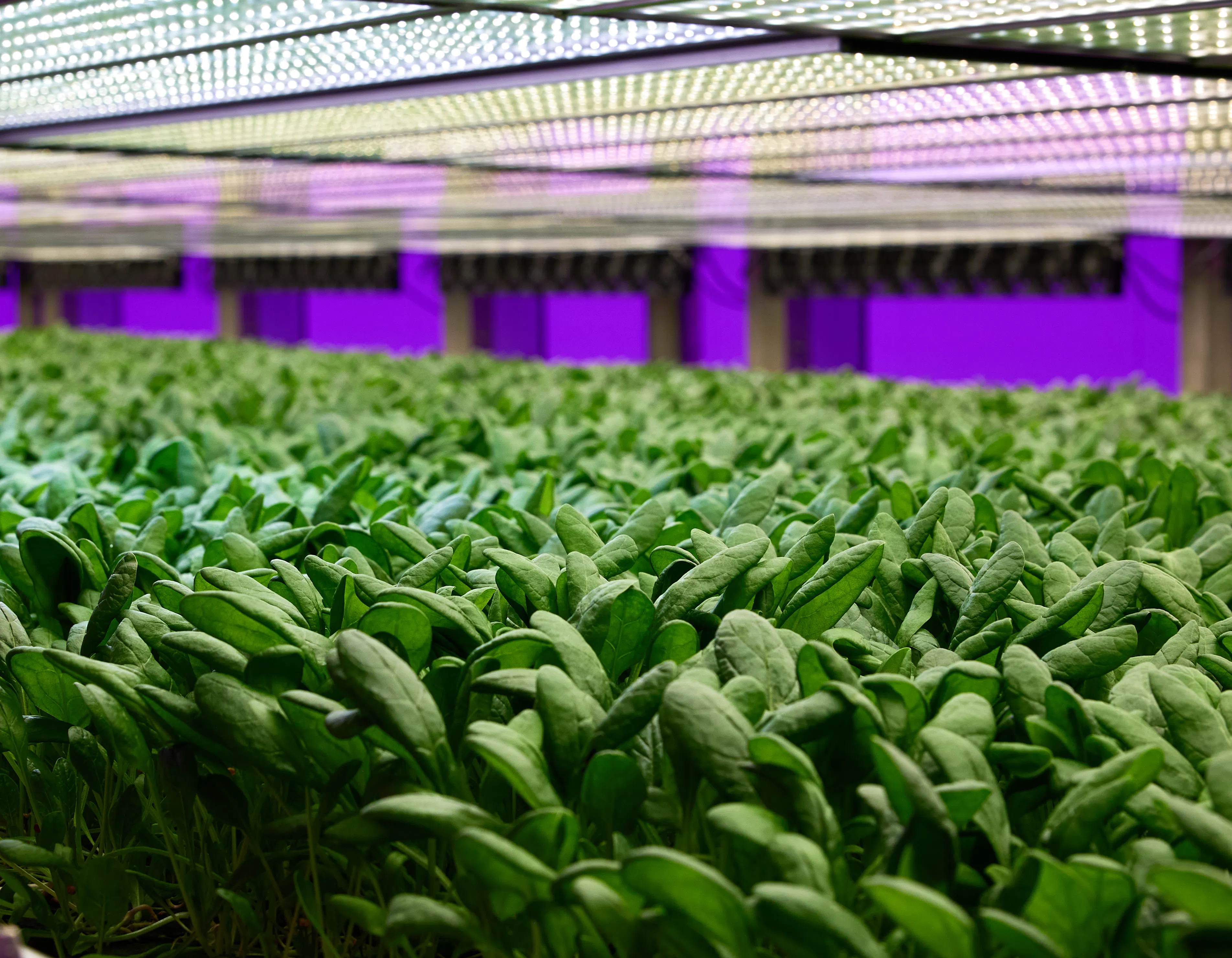
Growing indoors lets us time every harvest for that tender baby-leaf stage consistently, rather than leaving leaf size and texture up to the season.
Chef’s tip — Add a natural pop of green
Spinach is an easy way to add vibrant, natural colour to dishes. Blend it into pasta dough, oils, mash, mousses and sauces for a beautiful fresh green hue.
Dave Moorkens — Stacked Farm Chef
Growing indoors means we can harvest at exactly the right point and every leaf picked is a tender baby leaf, rather than waiting on a field crop to reach the right size on its own schedule. It also means no soil and no pests to fight, so there's no need for pesticides or herbicides at all.
That matters more for spinach than most greens, because baby spinach is usually eaten raw and unwashed and there's nothing on the leaf you wouldn't want on your fork.
Spinach is a good source of iron, folate, Vitamin K and antioxidants, and it's rightly considered one of the more nutrient-dense vegetables around.
Because our growing conditions are controlled from seed to harvest, the plant gets a steady, measured feed throughout, so what you get is consistent, batch after batch. And because it reaches you quickly after harvest, it hasn't had time to lose freshness sitting in transit.
Chef’s tip — Add it at the very end
For stews, soups and other saucy dishes, stir raw spinach through just before serving. The residual heat will gently wilt the leaves while keeping them fresh and vibrant.
Dave Moorkens — Stacked Farm Chef
Store it unwashed, in a bag or container with a little air space, in the fridge. Stacked Spinach will keep for around 18 days, however generally Spinach from the supermarket keeps for around five to seven days because spinach wilts faster than a sturdier green like cos / romaine or mixed leaf, so it's best used within that window.
Here's the head start most greens never get: ours arrive clean and dry. Grown indoors, pesticide-free, and never washed, so there's no leftover moisture quietly turning the leaves before you've even opened the pack. Store them well and they'll reward you.
Follow for recipes, farm tours and a very close look at some lettuce.
Yes, baby spinach is just spinach harvested young, while the leaves are still small and tender. Regular (English) spinach is the same plant left to mature, with bigger, tougher leaves best suited to cooking.
Baby spinach, yes that's exactly what it's bred and harvested for. English spinach and savoy are tougher and better cooked.
About 18 days, kept unwashed and sealed. It's more delicate than a sturdier green, so use it a little sooner than you would cos or mixed leaf.
Yes, it's a good source of iron, folate, Vitamin K and antioxidants, and works just as well raw in a salad as it does wilted into a warm dish.
No. We grow indoors with no soil, so there are no weeds or pests to manage, which means no pesticides or herbicides, ever.
Not certified, and here's why: organic certification in Australia requires soil, and ours is grown hydroponically. That said, we don't use any pesticides or herbicides at all, so while we can't carry the certification, the growing process is just as clean.
Raw in a salad, wilted into pasta, or blended into a smoothie, spinach earns its place as one of the most flexible greens in the fridge. Browse our Spinach recipes → for ideas either way.