12 August 2026
Parsley: The Most Underrated Herb in Your Kitchen
Dave Moorkens— Stacked Farm Chef
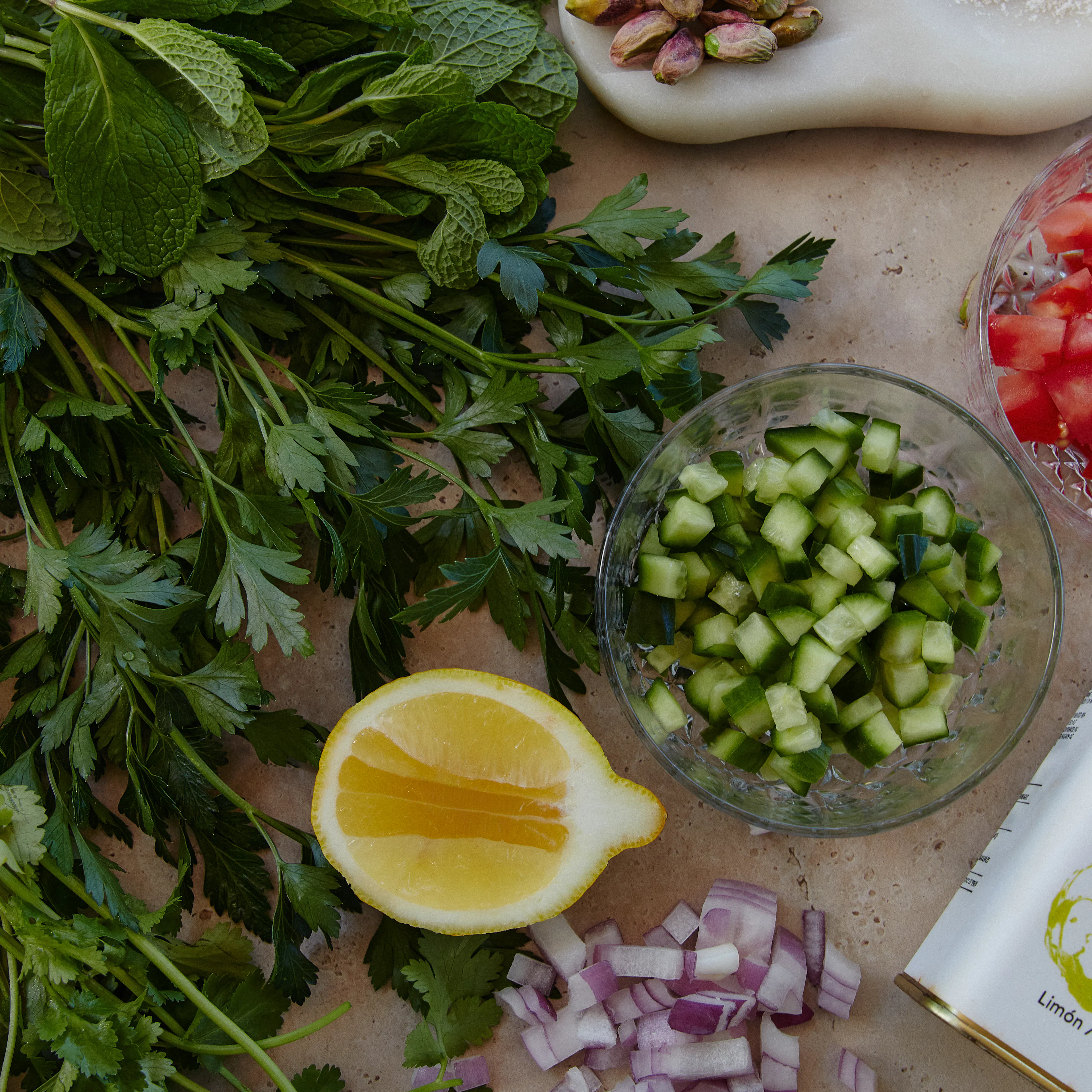
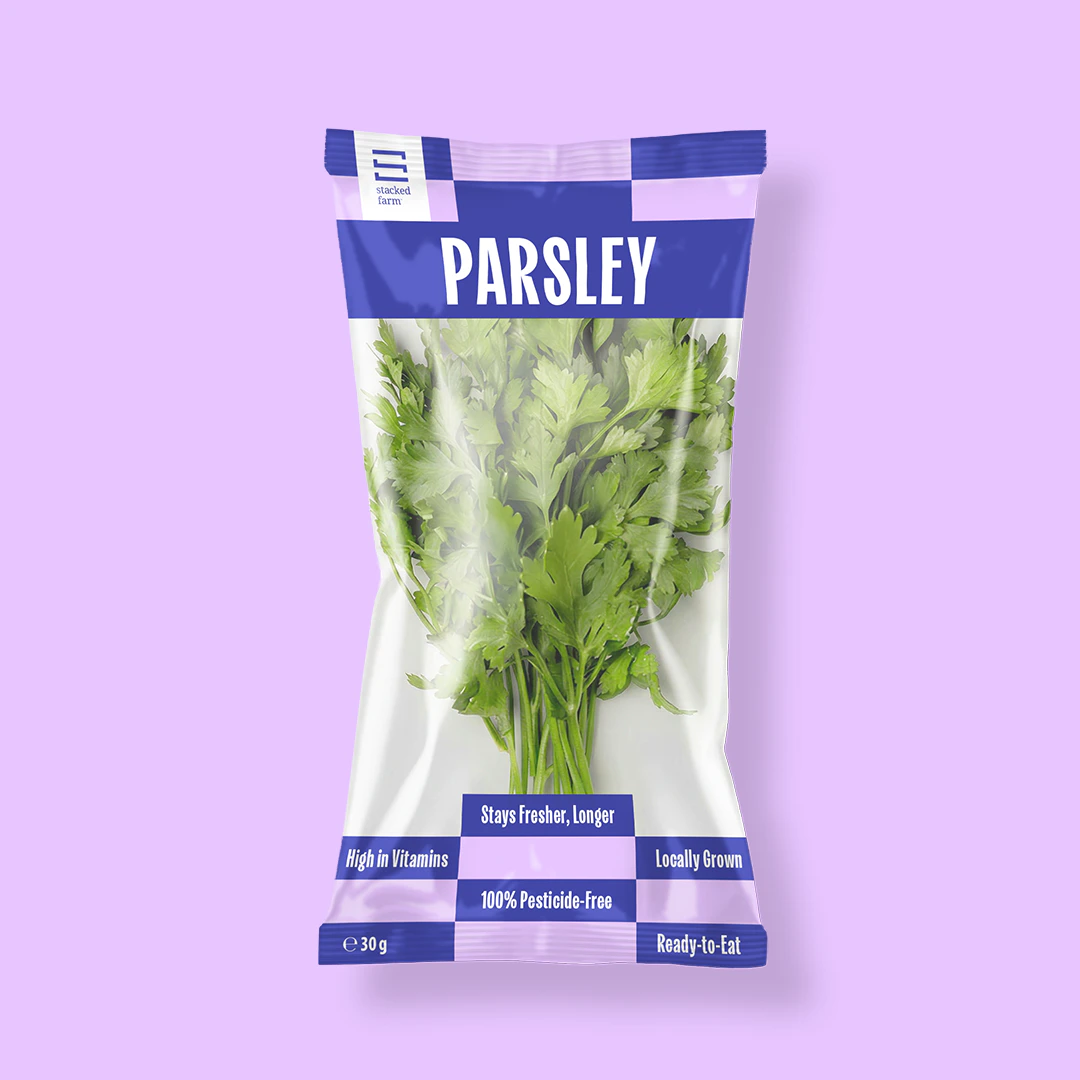
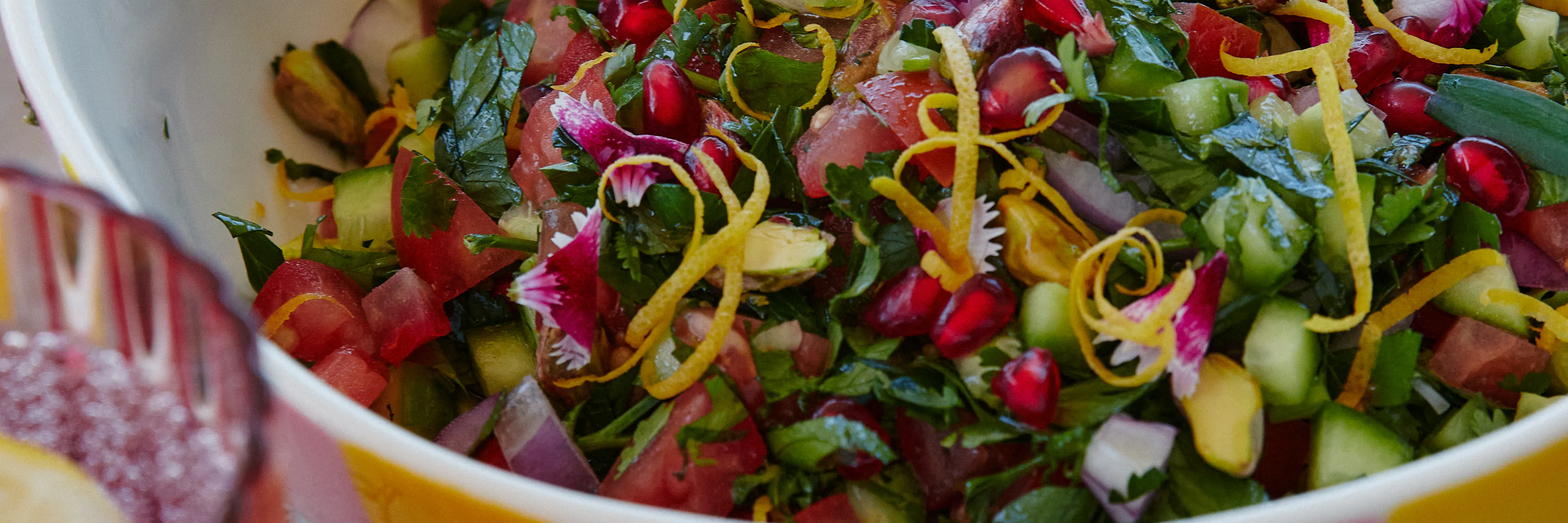
Parsley's the most-used herb in professional kitchens, and for good reason — it's a fragrant lift for almost anything: tabbouleh, gremolata, salads, or simply scattered over a finished dish. Unlike most herbs, it's often used raw and in genuinely large quantities, not just a token sprinkle.
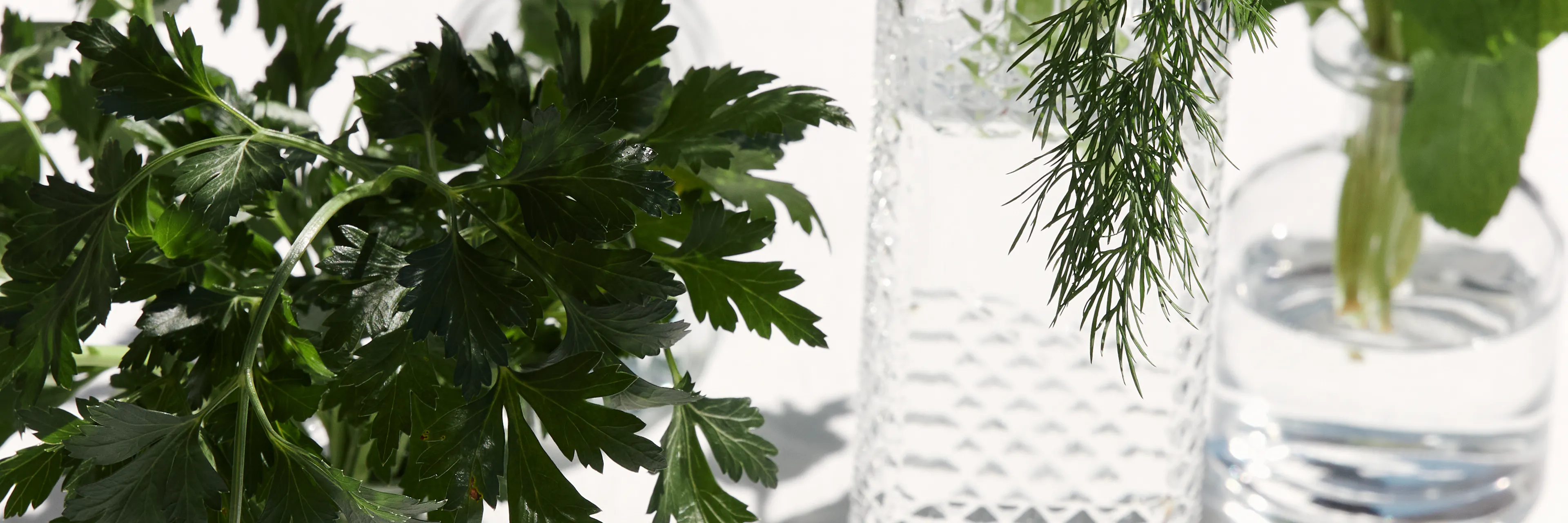
Flat leaf (Italian) parsley has broader leaves and a more intense, savoury flavour — the one chefs reach for in cooking. Curly parsley is milder, with tightly curled leaves, and tends to do garnish duty instead.
Chef’s tip — Choose your parsley wisely
Flat-leaf (Italian) parsley packs more flavour, making it a great choice for cooking. Save curly parsley for garnishing and finishing dishes.
Dave Moorkens — Stacked Farm Chef
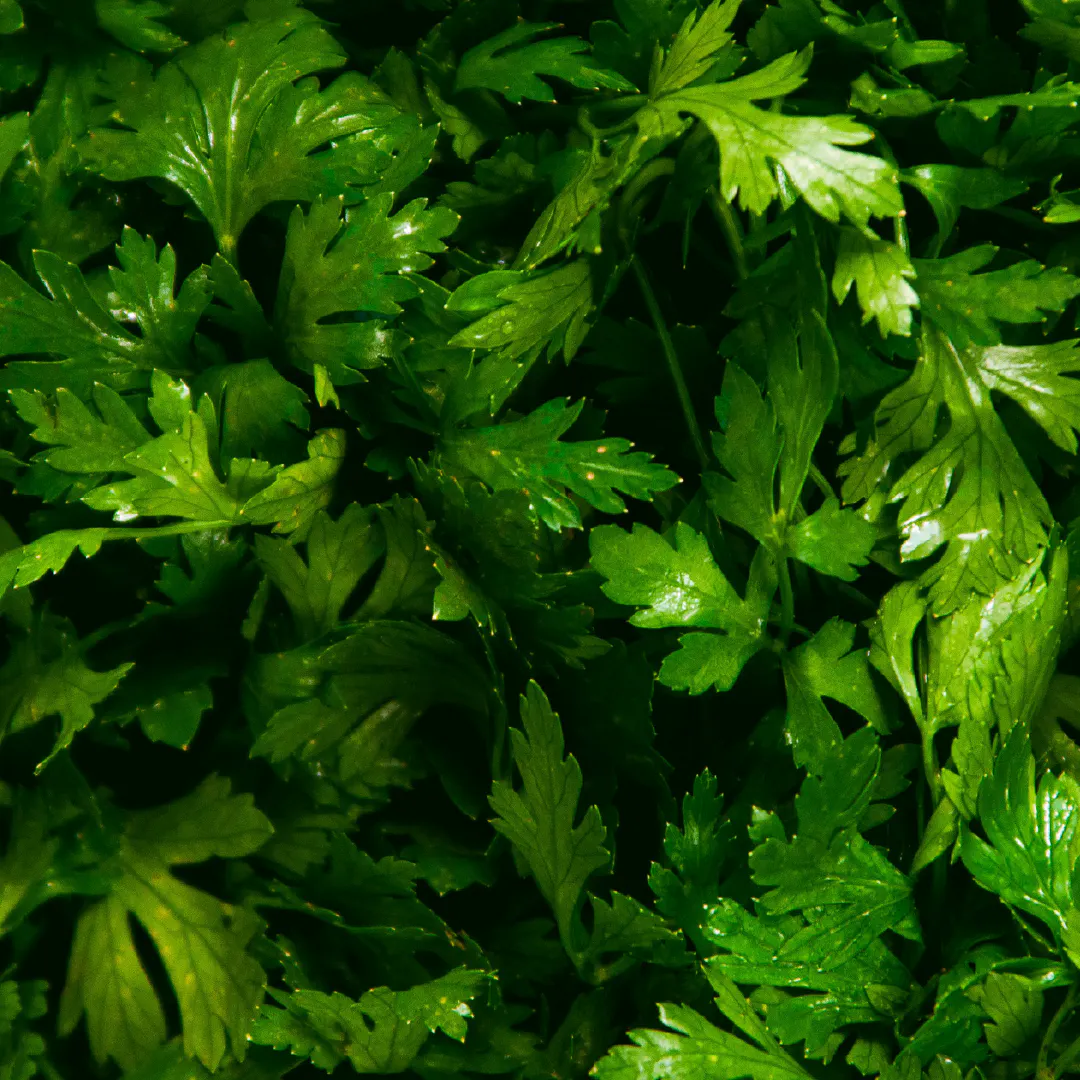
Growing coriander indoors keeps its delicate flavour intact and makes it far less likely to bolt (go to seed early) in hot weather — which means a more reliable supply of fresh, fragrant leaves regardless of the season. It's also grown without pesticides or herbicides, which matters when a herb's being used fresh and raw straight off the stem.
A shorter growing and storage chain also means coriander's volatile oils — the ones that release when you crush or chop the leaves — haven't had time to fade in transit.
Chef’s tip — Save the stalks
Don’t throw away your parsley stalks. Add them to homemade stocks, soups and broths to build an extra layer of fresh, herbaceous flavour.
Dave Moorkens — Stacked Farm Chef
Parsley carries a genuinely useful dose of Vitamin K and Vitamin C alongside its flavour — more than most people expect from what's often treated as just a garnish.
Treat it like fresh flowers. Trim the stems, stand them in a glass or jar of water, and store in the fridge with a bag loosely covering the leaves. Changing the water every few days helps it go the distance.
Because ours is grown without pesticides or the usual field threats, and travels a shorter distance to reach you, it's got less working against it once it's in your fridge.
Here's the head start most herbs never get: ours arrive clean and dry. Grown indoors, pesticide-free, and never washed — so there's no leftover moisture quietly turning the leaves before you've even opened the pack. Store them well and they'll reward you.
Follow for recipes, farm tours and a very close look at some lettuce.
Flat leaf has a stronger, more savoury flavour and is better for cooking. Curly parsley is milder and mostly used as a garnish.
Both — the stems carry a milder version of the flavour and hold up well in stocks and braises, while the leaves are saved for the finished dish.
It adds real flavour — parsley's used in genuinely large quantities in dishes like tabbouleh and gremolata, not just scattered on top.
No. We grow indoors with no soil, so there are no weeds or pests to manage — which means no pesticides or herbicides, ever.
No. Ours is ready to eat straight from the bag — skip the rinse.
Not certified, and here's why: organic certification in Australia requires soil, and ours is grown hydroponically. That said, we don't use any pesticides or herbicides at all — so while we can't carry the certification, the growing process is just as clean.
Tabbouleh, gremolata, or a big handful stirred through almost anything — parsley works harder than it gets credit for.